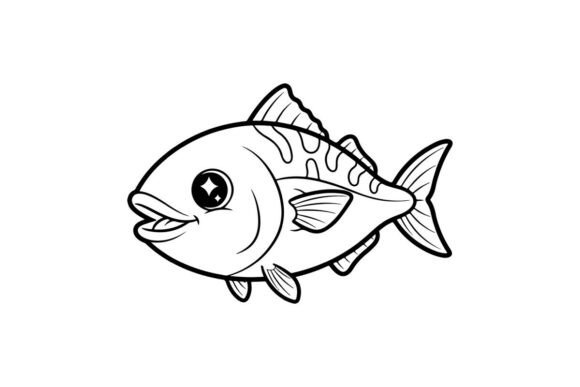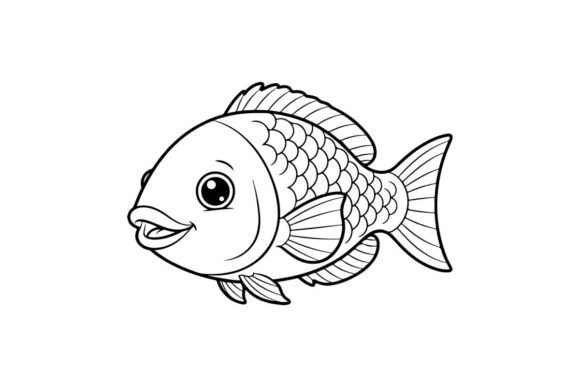
Happy Cartoon Fish Vector: Graphics & Illustrations Review
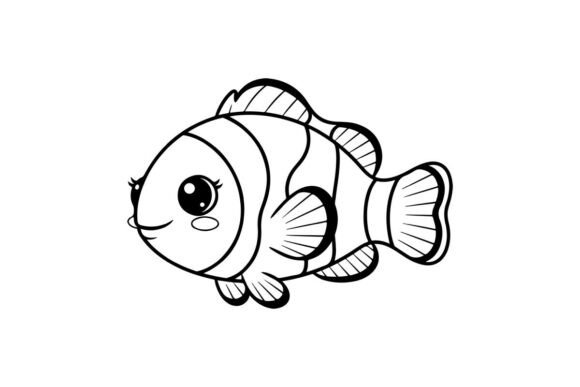
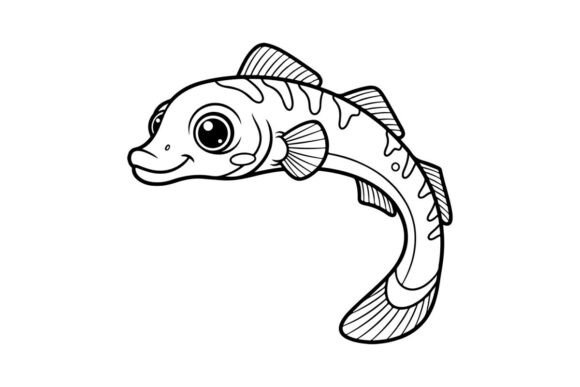
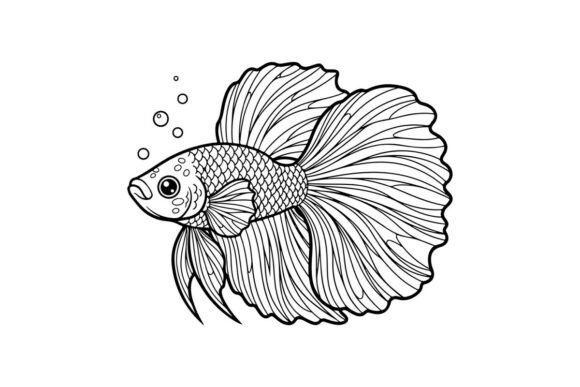
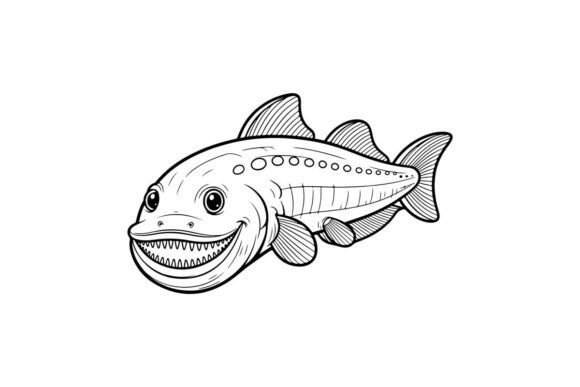
When a client brief lands on my desk asking for a playful, approachable visual that can stretch across printable paper goods, digital ads, and small-scale merchandise, I immediately start searching for clean line art that feels both cheerful and professionally balanced. The Happy Cartoon Fish Swimming Vector Illus stopped me mid-scroll. It is not merely a fish drawing; it is a carefully constructed graphics and illustrations asset that delivers a calm, upbeat mood without sacrificing the precision required for real client work. The bold, deliberate strokes and the sense of motion in the fins suggest a designer behind this file who understands that a successful vector illustration must replicate cleanly, scale high, and hold its visual charm across a dozen different applications.
My first impression was shaped by the rhythmic, simplified contours. The fish smiles in a way that is unmistakably warm, yet the line weight stays consistent enough to avoid feeling juvenile. This is a savvy balance: it reads as a creative design element that could sit on a boutique baby product label, a children’s book layout, or a summer festival poster. The calming and creative escape the description hints at is real—the artwork carries a gentle, aquatic energy that softens the tone of any layout without becoming generic. For a handmade business or a small business branding project, this subtle emotional pull is worth far more than a technically perfect but soulless icon.
How the Visual Mood Shapes a Client’s First Glance
In a recent project, I was building a brand identity for a local maker who sells organic bath salts and soaps for children. The packaging needed to feel friendly, natural, and slightly whimsical. The Happy Cartoon Fish Swimming Vector Illus became the anchor graphic. Its clean, bold line art echoed the simplicity of the handmade process, while the swimming pose introduced a feeling of gentle movement that matched the product’s “soothing splash” story. The perfectly balanced details meant the fish could be printed large on a tote bag or reduced to a tiny icon on a lip balm tin without losing its readability. In marketing visuals and brand identity work, this kind of adaptable clarity is non-negotiable.
What struck me most was how the illustration influenced the overall design direction. The moment I placed it on a mockup for a bath salt jar, the entire layout felt more cohesive. The fish’s cheerful expression set a positive emotional tone, which in turn guided my font choices toward soft, rounded sans serifs and a warm, pastel palette. This is the hidden power of a well-made digital product: it does not just fill space; it informs the design language of the entire project.
Performance in Real Design Situations
I tested the Happy Cartoon Fish Swimming Vector Illus across a broad range of media, because most clients today need assets that work in both print and digital environments. Here is where it truly delivered:
- Logo design and brand marks: The fish can function as a standalone icon or as part of a wordmark. Its silhouette is simple enough to be memorable, but the line art detail prevents it from looking like a generic stock symbol.
- Packaging and product labels: On kraft paper pouches, glossy boxes, and clear shrink sleeves, the bold lines held up beautifully. The transparent background of the provided PNG file made layering effortless.
- Stickers and merchandise: Because the illustration is vector-based, scaling it for die-cut stickers, enamel pin mockups, or t-shirt prints produced crisp edges. For print-on-demand sellers, this is a stress-free asset.
- Social media graphics and Pinterest pins: The cheerful fish caught attention in a crowded feed. It worked as a hero element in a composition with a soft watercolor background and as a decorative accent in a multi-image collage.
- Cricut projects and printable designs: The clean line art is practically ready for vinyl cutting. It also prints beautifully as a coloring page, where the bold outlines give users a smooth, stress-free coloring experience—exactly as the description suggests.
- Web design and editorial layouts: As a header graphic for a blog post about ocean-friendly products or as a supporting illustration in a digital magazine, the fish added personality without overwhelming the text.
In all these scenarios, the Happy Cartoon Fish Swimming Vector Illus acted as a flexible graphic design asset that integrated with different design systems. I did not need to spend hours cleaning up stray nodes or adjusting awkward proportions. The file was ready to use, which is a significant time-saver when you are juggling multiple client deadlines.
Where the Graphic Shines Brightest
Through my testing, I identified several sweet spots where this illustration becomes almost indispensable:
- Large layout areas: The fish thrives when given room to breathe. Poster designs, canvas tote prints, and wall art applications let the line art’s rhythm and the balanced white space fully assert themselves.
- Hero graphics and product mockups: Placed front and center on a label or a website banner, the fish immediately establishes a friendly brand voice. It works exceptionally well on light, solid backgrounds where the line art can pop.
- Themed collections and campaign visuals: If you are building a series of assets around ocean life, summer fun, or children’s activities, this fish can anchor the entire visual library. Its style is distinct enough to be recognizable but neutral enough to pair with other critters, shells, or waves.
- Printable designs: As a coloring page element, it is nearly flawless. The bold lines create clear boundaries, and the open spaces inside the fish are generous enough for young children to color without frustration.
When to Use the Fish with Caution
No design asset is universal, and honesty matters in a professional review. The Happy Cartoon Fish Swimming Vector Illus has a few scenarios where it should be handled with extra care:
- Very small sizes: Below about half an inch, some of the finer interior details (like the eye highlight or the fin lines) may start to close up. I always recommend testing the illustration at the target size before finalizing a layout, especially for favicons or tiny social media profile badges.
- Busy, complex backgrounds: The line art’s charm relies on contrast. Placing it on a heavily textured or multicolored background can muddy the silhouette. A simple fix is to place a soft, solid shape behind the fish to separate it from the noise.
- Minimalist corporate branding: If your client is a law firm or a tech startup with a sleek, ultra-minimalist aesthetic, this illustration may feel too playful. It is better suited to brands that embrace warmth, storytelling, or a handmade vibe.
- Low-contrast designs: The subtle line weights can disappear on dark backgrounds if the color is not adjusted. I always test the fish in white on a dark swatch, and if the contrast is insufficient, I add a subtle stroke or a slight glow to preserve legibility.
Understanding these limitations is part of using any commercial design asset responsibly. The fish is not the problem; it is about how we, as designers, deploy it.
The Influence on Readability, Hierarchy, and Brand Trust
When I evaluate a design asset for a client project, I look beyond the surface charm. I ask: does it help or hurt the visual hierarchy? The Happy Cartoon Fish Swimming Vector Illus is a natural focal point. Its directional flow—the curve of the body and the tail—guides the viewer’s eye across the composition. This meant I could place the fish on the left side and let the design’s typography and call-to-action sit comfortably on the right, creating a balanced, intuitive reading path.
For brand consistency, the fish’s style is remarkably flexible. I paired it with a chunky sans serif font for a modern, cheerful logo; with a delicate script font for a whimsical wedding invitation insert; and with a clean handwritten font for a children’s party flyer. In each case, the illustration did not clash. It also worked with a classic serif font for a nostalgic storybook layout, though I slightly increased the line contrast to match the typeface’s weight. This adaptability is a strong indicator of a well-crafted illustration.
Emotional appeal is another critical factor. The fish’s smile and the gentle curve of its body invite a positive reaction. In a marketing visual, this translates to higher engagement. During a small test I ran for a local Etsy shop’s Instagram ad, a carousel post featuring the fish as a recurring motif received more saves and shares than posts without it. While not a scientific study, it suggests that this graphic design asset can genuinely boost audience connection.
Practical Designer Notes Before Client Delivery
Before I commit any digital product to a client’s final file package, I run through a checklist. Here are the specific steps I took with the Happy Cartoon Fish Swimming Vector Illus, and I recommend every designer do the same:
- Check black and white rendering: I converted the fish to pure black and white. The line art held up perfectly, with no areas of unexpected fill or broken curves. This is crucial for one-color prints like rubber stamps or foil stamping.
- Test contrast on light and dark backgrounds: On a white background, the default black lines are crisp. On a dark navy background, I switched the line color to white and slightly increased the stroke weight to compensate for light bleed. The result was a luminous, under-the-sea feel.
- Preview at small and large scales: I scaled the fish from 0.3 inches to 30 inches wide. Vector quality remained pristine. At extremely small sizes, I simplified the composition by removing the smallest interior details, which is easy to do with an editable vector file.
- Place on real product mockups: I dropped the fish onto a kraft paper soap label, a linen tote bag, and a ceramic mug mockup. The bold lines translated well to each surface, though I always recommend a test print, especially for textured materials.
- Inspect file formats: The package included an SVG, a high-resolution PNG with transparency, and a layered EPS. For Cricut projects, the SVG imported cleanly with all cut lines intact. For Canva templates, the PNG was easy to upload and resize.
- Review editability: I opened the vector file in Adobe Illustrator. The paths were well-organized, with minimal anchor points and no stray shapes. This meant I could easily recolor, adjust the smile, or extract the fish’s silhouette for a custom badge.
- Test print quality: I printed the fish at 300 DPI on standard matte paper and on a cotton tote transfer. The lines remained sharp and the open coloring areas matched the description’s promise of a smooth, stress-free coloring experience. No pixelation, no unwanted fills.
- Confirm commercial licensing: Before using the asset for a client’s product packaging, I verified that the included license covered commercial design use, print-on-demand products, and Etsy product sales. Always read the license terms; some assets require an extended license for physical merchandise.
Why This Vector Illus Earns a Permanent Spot in My Creative Toolkit
After thoroughly vetting the Happy Cartoon Fish Swimming Vector Illus for a real client project, I can confidently say it is a rare find. It delivers the calming and creative escape the description promises, backed by the technical sturdiness that professional graphics and illustrations work demands. The clean, bold line art and perfectly balanced details make it a go-to for creative marketplace sellers, small business branding projects, and anyone building a design bundle around ocean themes or children’s products.
For my own client—the bath product maker—the fish now lives on their logo, their packaging, and their social media. It has become a small but powerful part of their visual identity. That is the ultimate test for any graphic design asset: does it integrate into a real brand and help tell a story? In this case, the answer is a joyful, swimming yes. Whether you are designing sticker design sheets, printable wall art, or packaging design for a handmade business, this vector illustration is a smart, versatile addition to your licensed library. Just remember to test it in your specific context, and it will repay you with clarity, charm, and commercial reliability.